
Window buying guide: how to choose windows in Quebec
Choosing new windows involves more than comparing a few models and selecting the one that best matches your home’s style. In Quebec, windows must withstand significant temperature fluctuations, harsh winters, humidity, wind and precipitation.
The frame material, window type, glazing, energy efficiency and, above all, the quality of the installation can all affect your home’s comfort and the performance of your new windows.
PVC or hybrid windows? Double or triple glazing? How much should you budget to replace your windows? Which certifications should you look for? Are window rebates still available in Quebec?
This guide covers the main factors to consider when choosing windows suited to your home, your budget and Quebec’s climate.
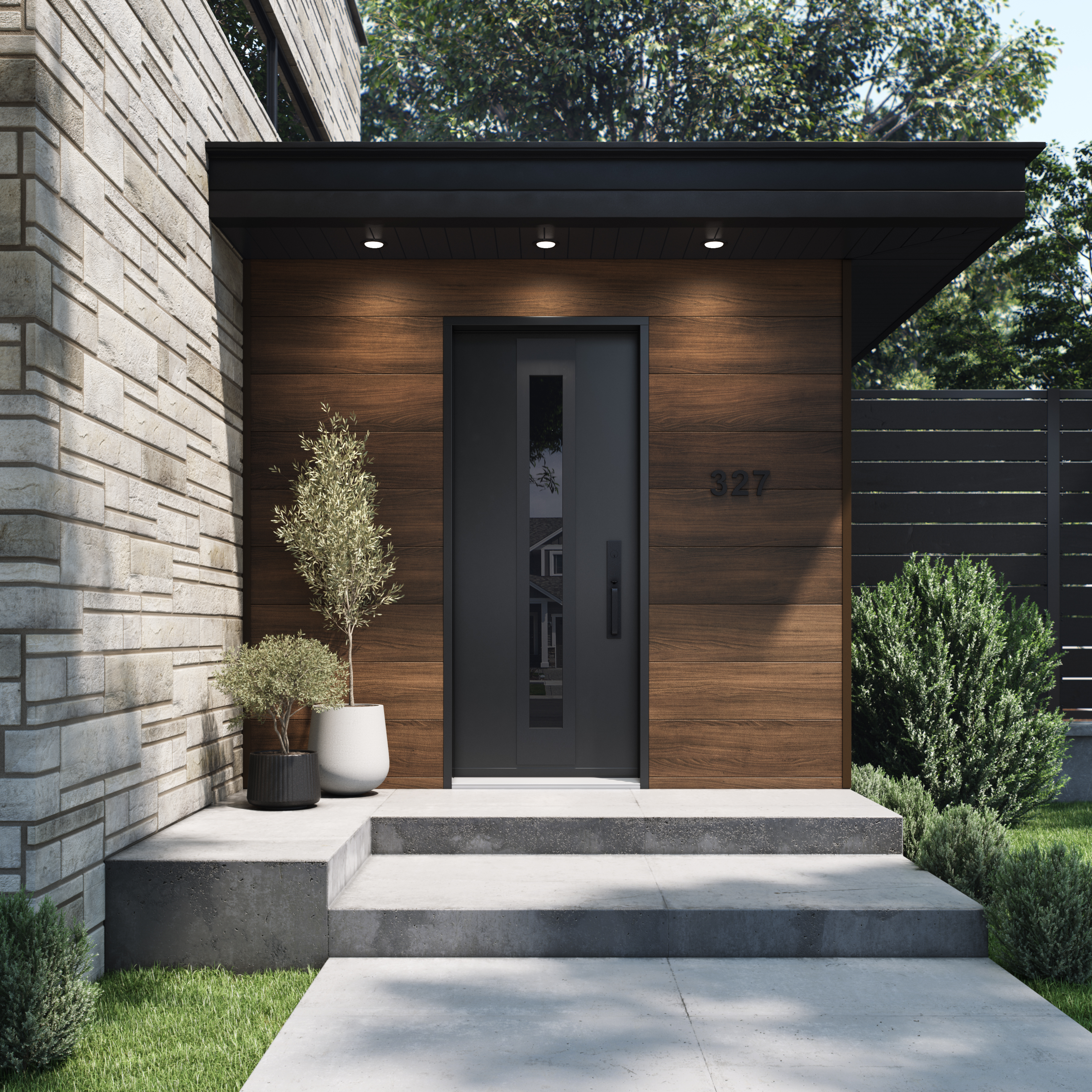
What Are the Main Factors to Consider When Choosing Windows?
Before comparing models, it’s important to assess your needs. A window that works perfectly in one room may not necessarily be the best choice for another.
The main factors to consider include:
- frame material;
- opening style;
- energy performance;
- type of glazing;
- air and water tightness;
- opening dimensions;
- window orientation;
- your home’s architectural style;
- maintenance requirements;
- quality of installation;
- warranties;
- available budget.
In Quebec, energy performance should also be an important consideration because of the significant temperature variations throughout the year.
PVC or Hybrid Windows: Which Should You Choose?
PVC and hybrid windows are both common options for residential projects. However, no single material is automatically the right choice for every home.
The best choice depends on factors such as your budget, window dimensions, preferred style and performance requirements.
PVC Windows: Versatile and Easy to Maintain
PVC windows are particularly popular for residential applications.
PVC offers several advantages:
- good value for money;
- good insulating properties;
- low maintenance;
- resistance to moisture;
- a variety of configurations;
- good durability when made with quality materials and properly installed.
For many homeowners, PVC is an attractive option when looking for a high-performing window while keeping the project budget under control.
Want to better understand what makes a PVC window different?
Learn more about the characteristics of PVC, its advantages and the factors to consider before making your choice.
Hybrid Windows: PVC on the Inside, Aluminum on the Outside
A hybrid window generally combines the properties of two materials. At Fenêtres Magistral, our hybrid models combine PVC and aluminum.
The PVC interior contributes to insulation and makes maintenance easier, while the aluminum exterior provides a durable finish and offers a variety of aesthetic possibilities.
Hybrid windows may be particularly appealing if you’re looking for:
- an aluminum exterior finish;
- more color options besides white;
- a contemporary style;
- a solution suited to certain large openings;
- a balance between performance and aesthetics.
Want to better understand what makes a hybrid window different?
Learn how hybrid windows combine PVC and aluminum, their advantages and the factors to consider before making your choice.
PVC vs. Hybrid Windows: Comparison Chart
| Criteria | PVC Windows | Hybrid Windows (PVC and Aluminum) |
| Main advantages | Good value for money, good insulating properties, low maintenance and good moisture resistance. | Combine the insulating properties of PVC with the durability and exterior finish of aluminum. |
| Things to consider | PVC is slightly more energy-efficient. Available only in white. | Generally more expensive than all-PVC windows. Available in a variety of colors. |
| Maintenance | Low | Low |
| Energy performance | They work very well when they are well-designed and properly installed. | They work very well when they are well-designed and properly installed. |
| Estimated lifespan | Approximately 25 to 40 years* | Approximately 25 to 40 years* |
| Budget | Generally more affordable than hybrid windows. | Generally more expensive than all-PVC windows. |
| A good choice if… | You’re looking for a high-performing, durable and cost-effective window. | You’re looking for excellent energy performance, the durability of an aluminum exterior and more customization options. |
*A window’s lifespan can vary considerably depending on the quality of the materials and manufacturing, installation, maintenance, exposure to the elements and conditions of use. These ranges should therefore be considered estimates rather than guarantees.
Which Type of Window Should You Choose?
The material is only one part of the equation. You also need to choose an opening style suited to each room, the available space and your ventilation needs.
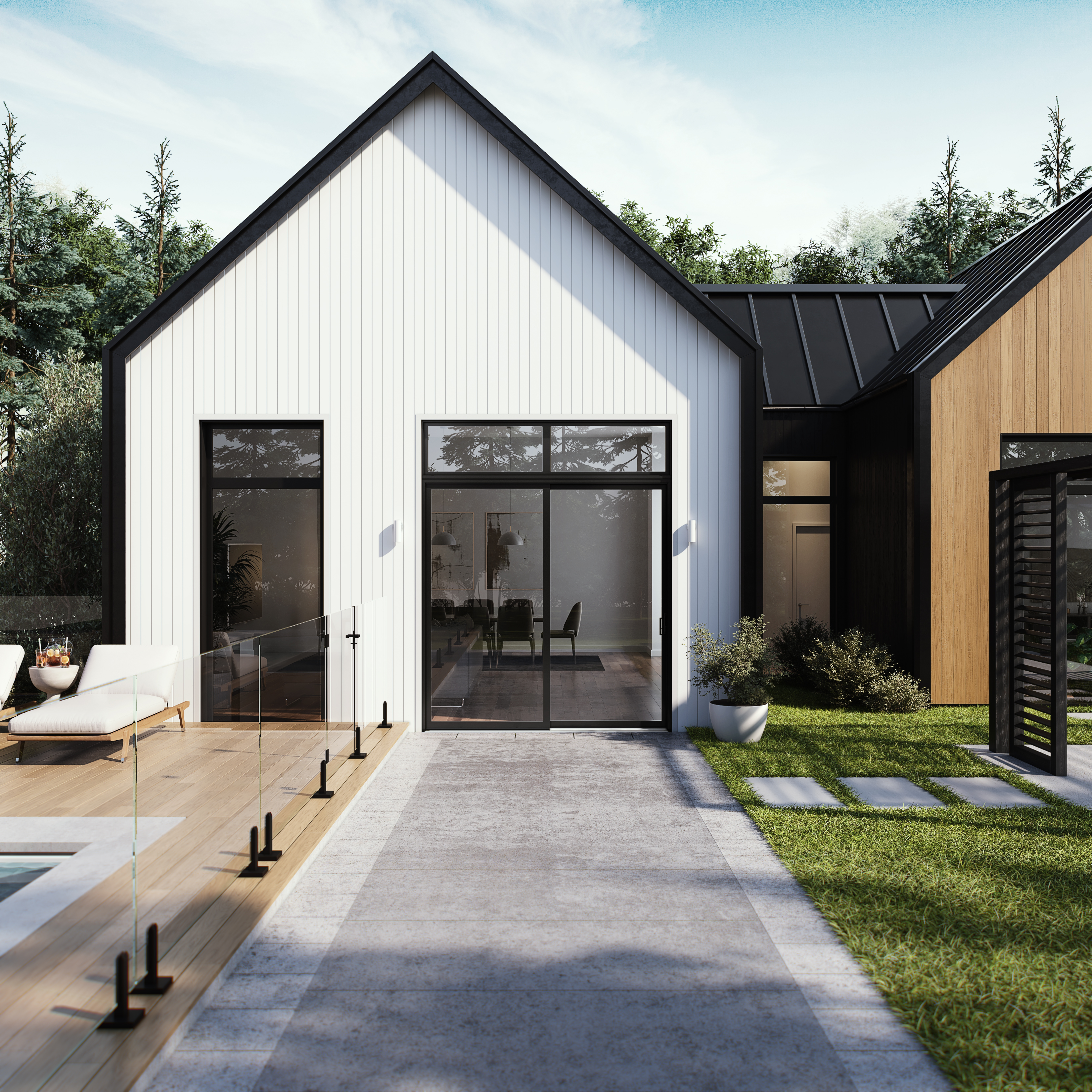
Casement Windows
Casement windows are a versatile choice for Quebec homes. They open fully outward using a crank, providing good ventilation and a clear opening.
When closed, the sash presses against the frame’s weatherstripping, helping provide good air and water tightness, our highest-performing model. The large glass surface also allows plenty of natural light into the home.
Why choose a casement window?
- good air and water tightness;
- wide opening for good airflow;
- large glass surface and plenty of natural light;
- easy to open and close with a crank;
- suitable for many rooms and home styles;
- can be combined with a fixed window;
- easy to maintain,
Things to consider: Since casement windows open outward, enough clearance is required in front of the window. They may therefore be less suitable in certain locations, such as directly next to a patio or walkway.
Awning Windows
Awning windows are hinged at the top and open outward from the bottom. This configuration provides good ventilation while offering some protection from light precipitation when the window is open.
They are particularly practical where vertical space is limited and can be installed on their own or combined with a fixed window to create a larger glass surface.
Why choose an awning window?
- good air and water tightness;
- allows ventilation during light precipitation;
- versatile format for openings that are wider than they are tall;
- can be combined with a fixed window;
- easy to open with a crank.
Things to consider: Because the window opens outward, enough clearance is required in front of it.
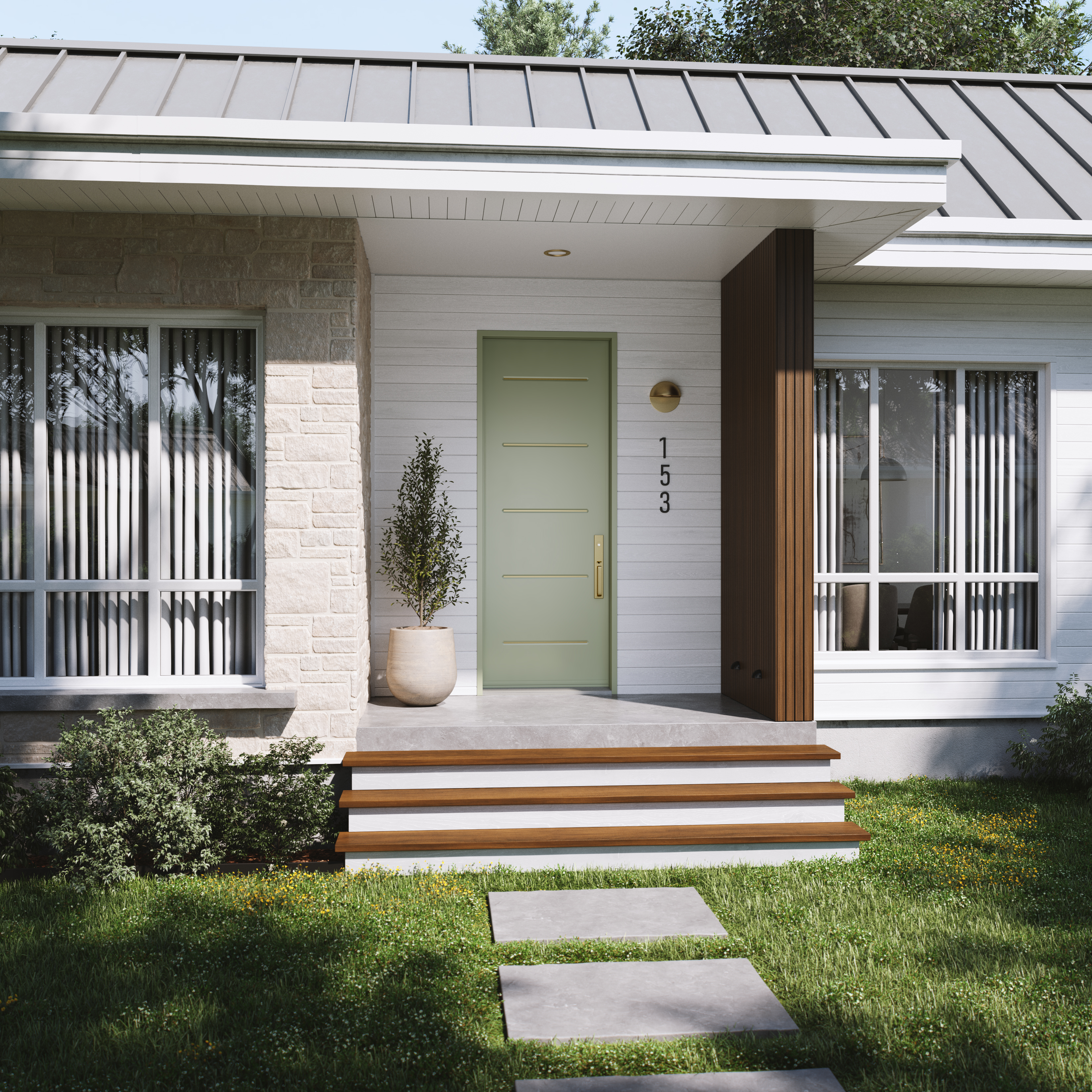
Sliding Windows
Sliding windows open horizontally by sliding one or more sashes along the frame. Because they don’t require clearance inside or outside the home, they’re a practical solution when space around the window is limited.
Their simple operation and format make them an attractive option for certain bedrooms, basements and wider openings.
Why choose a sliding window?
- no interior or exterior clearance required;
- simple and practical operation;
- well suited to openings that are wider than they are tall;
- makes it easy to ventilate a room;
- practical where space is limited;
- The most economical model;
Things to consider: Depending on its design, a sliding window may provide a different level of air tightness than a casement or awning window. It’s important to compare the performance of the model you’re considering.
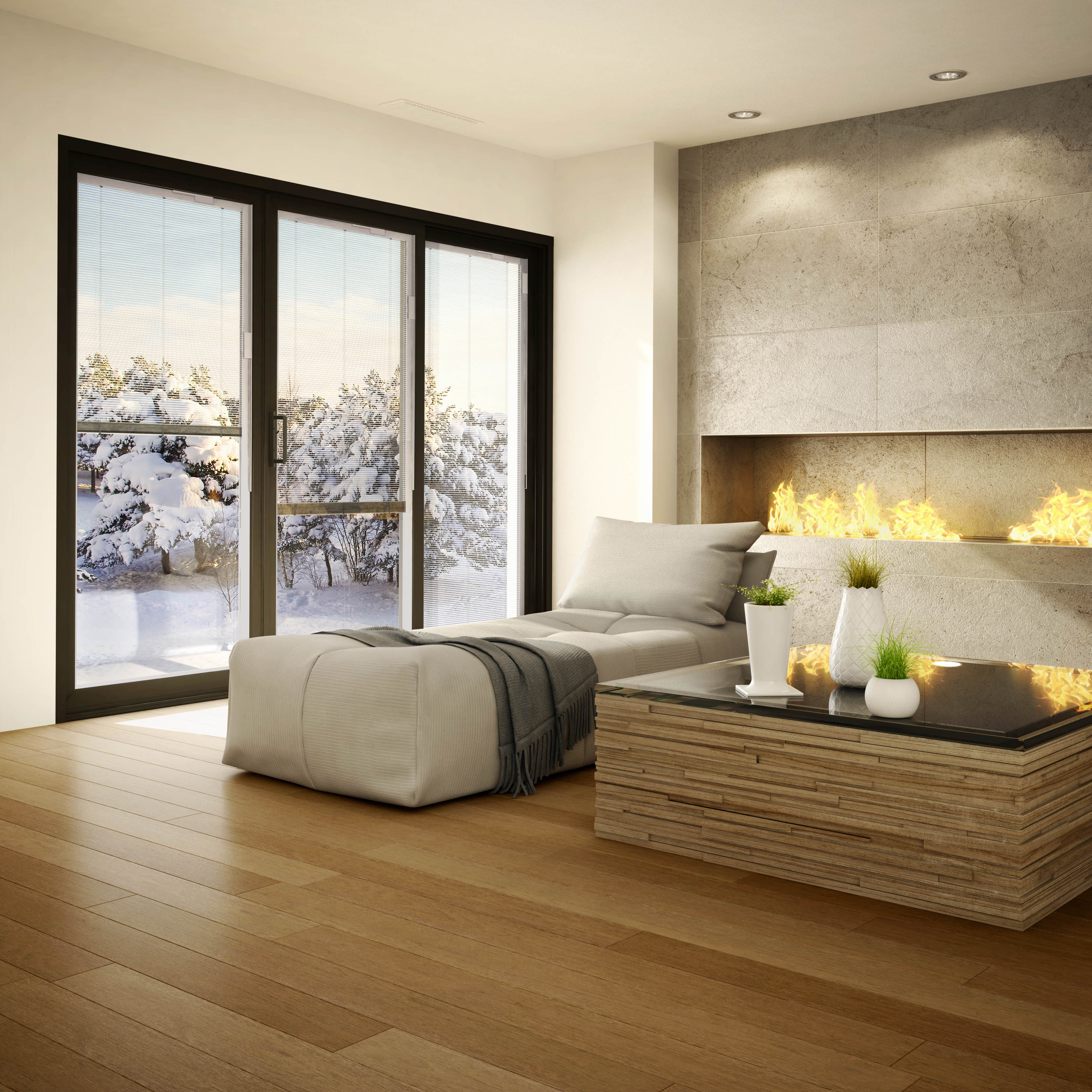
Hung Windows
Hung windows open vertically by sliding a sash up or down. They don’t require any exterior clearance, making them practical near a patio, balcony or walkway.
Their appearance is particularly well suited to traditional or classic homes, while still fitting a variety of architectural styles.
Why choose a hung window?
- no exterior clearance required;
- practical vertical opening where space is limited;
- particularly well suited to traditional-style homes;
- makes it easy to ventilate a room;
- some models make cleaning easier with sashes that tilt inward.
Fixed and Architectural Windows
Fixed windows don’t open. They’re mainly used when you want to maximize natural light and glass surface without needing ventilation in that location.
Architectural windows offer different shapes and dimensions to highlight specific features of a home. They can also be combined with operable windows to create larger window configurations.
Why choose a fixed or architectural window?
- maximizes glass surface and natural light;
- makes it possible to create large window configurations;
- available in a variety of shapes and dimensions;
- highlights the architecture of the home;
- can be combined with all of our window models.
Things to consider: A fixed window doesn’t open and therefore can’t provide ventilation. This should be considered when planning the placement of windows throughout your home.
Discover our fixed and architectural windows
Double or Triple Glazing: Which Should You Choose for Your Home?
Both double and triple glazing can offer good performance. The best choice depends primarily on the location of the window, the level of comfort you’re looking for and the characteristics of your home.
| Your situation | Double glazing | Triple glazing |
| You’re looking for a good balance between performance and budget | ✓ Good choice, the most popular one | Possible, but the additional investment isn’t always necessary |
| Some rooms are particularly cold in winter | May be suitable depending on the window | ✓ Worth considering to improve comfort near windows |
| Your windows are highly exposed to cold or prevailing winds | May be suitable | ✓ May offer an advantage thanks to its greater thermal insulation |
| You have large glass surfaces | May be suitable depending on the performance required | ✓ May be beneficial for improving comfort near large glass surfaces |
| Keeping project costs down is your main priority | ✓ Generally more affordable | More expensive |
| You’re looking for the best possible thermal performance | Good performance is possible | ✓ Generally provides better thermal performance |
In Practice, Should You Choose Double or Triple Glazing?
Double glazing can be an excellent choice for many residential projects and provides a good balance between performance and budget. Triple glazing becomes particularly appealing when you’re looking to improve thermal performance and comfort, for example with certain large glass surfaces or windows that are particularly exposed to the cold.
This doesn’t necessarily mean choosing triple glazing for the entire house. The best choice can vary from one window to another depending on its location and the needs of the room.
What Does ENERGY STAR® Certification Mean for a Window?
ENERGY STAR® certification makes it easier to identify windows that meet energy performance criteria established in Canada.
For consumers, it provides a useful reference when comparing different window models. It considers the overall performance of the product rather than simply whether it has double or triple glazing.
Why Look for ENERGY STAR®?
- to compare the energy performance of windows more easily;
- to choose a product suited to the demands of the Canadian climate;
- to help reduce heat loss through windows;
- to verify eligibility for certain financial assistance programs when ENERGY STAR® certification is one of the requirements.
What Budget Should You Plan for Replacing Multiple Windows?
For a project involving several windows, the total budget depends not only on the number of openings but also on their size and the models selected. A home with ten windows will therefore not necessarily cost twice as much as a home with five.
Want to know the actual cost of your project?
A personalized estimate makes it possible to determine the price based on the dimensions of your openings, the models you choose and the work required.
When should you replace your windows?
The lifespan of a window depends on the material, the quality of its construction, its installation, its maintenance, and its exposure to the elements. Therefore, the age of the window alone is not enough to determine whether it needs to be replaced.
What Affects a Window’s Lifespan?
01Quality and Materials
Manufacturing quality, frame material, glazing and hardware all play a role in how long a window lasts.
02Installation
Proper installation helps maintain the window’s air and water tightness and performance over time.
03Exposure to the Elements
Sunlight, temperature fluctuations, wind, rain and snow can all affect how window components age.
04Maintenance
Cleaning, hardware maintenance and periodic inspection of caulking can help keep windows in good condition.
How Do You Know if Your Windows Need to Be Replaced?
Rather than relying solely on their age, certain signs may indicate that a window should be inspected.
- Drafts
- Difficulty opening or closing the window
- Persistent condensation between the panes
- Deterioration of the frame or other components
- Water infiltration
- Noticeable discomfort near the windows
What Rebates and Financing Options Are Available for Window Replacement?
Financial assistance programs can help cover part of the cost of a window replacement project. Since eligibility criteria and grant amounts may change, it is important to check the terms and conditions of the current programs before beginning the work. Contact the various levels of government and your municipality.
Financial Assistance Available in Quebec
Rénoclimat
As of 2026, the Quebec government’s Rénoclimat program provides financial assistance for certain door and window replacement projects.
For eligible work, the current financial assistance is:
- $150 per rough opening replaced.
New doors or windows must notably be ENERGY STAR® certified. Homeowners must keep their invoices and ENERGY STAR® labels to demonstrate that the products are eligible.
Please note that a bay window made up of several windows within a single rough opening counts as one opening when calculating the financial assistance. Replacing only the glass, a sash or a door without its frame isn’t eligible for this assistance.
The program also requires a specific process. An energy evaluation is required before the work and another after the work, and the home’s EnerGuide rating must improve in order to receive the financial assistance.
Tip
Before starting the work, check the eligibility requirements, required products and steps involved. Some programs may require registration or an evaluation before work begins.
Financing Plans for Your Door and Window Project
In addition to financial assistance programs, Fenêtres Magistral offers flexible financing solutions that allow homeowners to spread the cost of their project over time.
Depending on the plan selected, you may be able to finance up to 100% of the project cost, make equal payments or defer the start of your payments. Financing is available through Fenêtres Magistral’s financial partners, including Fairstone Financial and National Bank.
Equal Payment Financing
Allows you to spread the cost of your new doors and windows over several months rather than paying the full project cost at the time of purchase.
Deferred Financing
Depending on the applicable terms, certain plans allow payments to be deferred for up to 12 months. The full loan must then be repaid at maturity according to the financing terms.
Other plans may also be available. A Fenêtres Magistral advisor can explain the available options and associated financing costs to help you choose the solution that best suits your project.
Discover our financing options
Mistakes to Avoid When Choosing Windows
XChoosing Based on Price Alone
A lower price doesn’t necessarily mean the products, installation and included services are equivalent.
XOverlooking Installation
Even a high-performing window can lose some of its benefits if it isn’t properly installed.
XComparing Materials Alone
Two PVC windows can offer different levels of performance depending on their design, glazing and components.
XChoosing the Same Window Style Everywhere
The ideal opening style can vary depending on the room, available space and ventilation needs.
XStarting the Work Before Checking Available Financial Assistance
Some programs require specific steps or evaluations before work begins.
Steps to Choosing the Right New Windows
There’s no single window that’s ideal for every home. The best choice depends on your home, your budget, your aesthetic preferences and the level of performance you’re looking for.
Before making your decision:
- determine which windows actually need to be replaced;
- compare PVC and hybrid windows based on your needs;
- choose the appropriate opening style for each room;
- compare energy performance;
- check for ENERGY STAR® certification;
- give installation as much importance as the product itself;
- check financial assistance programs before starting the work;
- request a detailed quote.
Since 1997, Fenêtres Magistral has manufactured, sold and installed custom doors and windows throughout Greater Montreal. Our advisors can help you choose the materials, models, glazing and options that best suit your home.